Duolingo App Review 2026: Does Daily Mobile Language Learning Really Work?
Language learning apps have become part of everyday routines for millions of people, and Duolingo remains one of the most recognised names in this category in 2026. What started as a simple gamified tool for vocabulary practice has evolved into a much broader mobile learning system with AI-powered speaking exercises, adaptive lesson paths, video calls with digital tutors, and expanded support for academic and professional language goals. Still, one important question remains relevant: can daily learning through a mobile app genuinely help people build real communication skills? This review looks closely at how Duolingo works in 2026, what has improved over recent years, where the app still struggles, and whether consistent short sessions can produce meaningful language progress.
How Duolingo Works in 2026
Duolingo in 2026 focuses heavily on short, repeatable learning sessions designed for mobile users with limited free time. Lessons are organised into structured paths rather than isolated modules, which means users follow a progression that combines vocabulary, listening, pronunciation, sentence construction, and contextual grammar. The application now supports more realistic conversations thanks to AI-generated dialogue systems that react dynamically instead of relying only on scripted phrases.
One major improvement is the integration of speech recognition that analyses pronunciation in detail. Earlier versions of the app often accepted inaccurate pronunciation, but the current system provides clearer feedback about stress patterns, pacing, and vowel sounds. This is particularly useful for learners studying English, Spanish, French, German, or Japanese, where pronunciation strongly affects communication clarity.
Another notable feature is personalised pacing. Duolingo now adjusts review intensity depending on user behaviour, memory retention, and error frequency. Learners who struggle with specific grammar forms receive additional contextual exercises automatically. This adaptive approach makes the experience less repetitive compared to earlier versions, where users frequently complained about excessive sentence recycling without measurable progress.
Daily Learning Habits and User Retention
One reason Duolingo continues to dominate the language learning market is its understanding of behavioural psychology. The streak system remains central to user retention in 2026, encouraging people to complete lessons daily even when they only have a few minutes available. While some critics argue that streaks can become superficial motivation, research on micro-learning continues to show that frequent exposure improves long-term memory retention.
The app also uses increasingly sophisticated reminder systems. Notifications now adapt to the user’s routine instead of appearing at fixed times. Someone who usually studies during commuting hours may receive reminders aligned with travel patterns, while evening learners receive different scheduling suggestions. These adjustments make the app feel more integrated into daily life rather than simply functioning as a standalone educational tool.
Community interaction has also improved. Learners can now join language circles with shared weekly goals, pronunciation challenges, and collaborative tasks. Although Duolingo is still primarily designed for solo learning, these social features help maintain motivation over longer periods. Many users report that consistency becomes easier when progress feels visible within a group environment rather than existing only as private statistics.
Can Duolingo Build Real Language Skills?
Duolingo performs best as a tool for habit formation, vocabulary expansion, and listening familiarity. For beginners, the app creates strong foundations by exposing users to repeated sentence patterns and practical phrases. Learners who spend at least fifteen to twenty minutes daily often develop reading comprehension surprisingly quickly, especially in languages that share similarities with their native language.
Listening skills have improved significantly because Duolingo now uses more natural voice synthesis and regional accent variation. Earlier robotic speech patterns sometimes created unrealistic listening expectations, but the current system includes different speaking speeds and conversational tones. This makes learners more comfortable when transitioning to real-world audio such as podcasts, interviews, or casual conversations.
However, the app still has limitations regarding advanced fluency. Complex writing, nuanced conversation, and cultural communication habits cannot be fully mastered through repetitive exercises alone. Users aiming for professional proficiency, university-level communication, or business negotiation skills usually require additional resources such as live tutoring, immersion practice, long-form reading, or structured grammar study outside the application.
Strengths and Weaknesses Compared With Other Apps
Compared with competitors like Babbel, Busuu, Memrise, and Rosetta Stone, Duolingo remains the strongest option for users seeking accessibility and daily engagement. The free version still offers substantial functionality, which is important in a market where many educational apps aggressively limit unpaid users. Even in 2026, Duolingo provides more learning opportunities without immediate subscription pressure than many rivals.
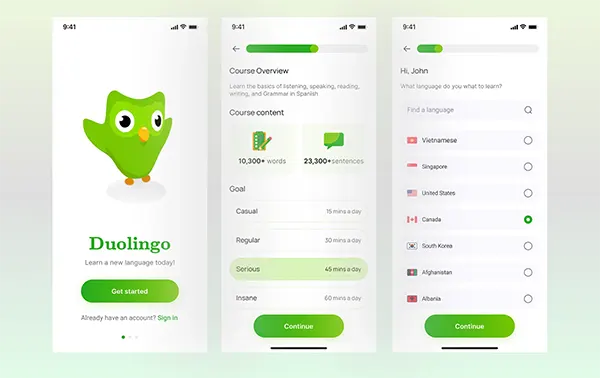
Its biggest advantage is simplicity. Lessons are fast, visually clear, and optimised for mobile screens. Users can complete sessions while travelling, waiting in queues, or during short work breaks. This flexibility explains why many learners maintain long-term consistency with Duolingo even if they previously abandoned more academically structured courses.
The main weakness remains depth. Some advanced learners feel the app prioritises engagement mechanics over deeper language understanding. Grammar explanations are better than before, but they still lack the detailed educational structure offered by formal courses or experienced teachers. As a result, Duolingo works best as one component within a broader learning strategy rather than functioning as a complete replacement for comprehensive language education.
Is Duolingo Worth Using in 2026?
For beginners and intermediate learners, Duolingo remains one of the most practical language learning applications available in 2026. Its ability to transform small daily study sessions into long-term habits is still its greatest strength. Many people fail at language learning not because methods are ineffective, but because they stop practising consistently. Duolingo addresses this problem extremely well.
The application is especially useful for travellers, casual learners, students preparing for basic communication, and professionals wanting gradual exposure to another language. The app’s mobile-first design suits modern schedules where long uninterrupted study sessions are often unrealistic. Even ten minutes daily can gradually improve vocabulary recognition and sentence familiarity over time.
At the same time, expectations must remain realistic. No mobile app alone can instantly create fluency. Users who combine Duolingo with conversation practice, media consumption, reading, and speaking opportunities generally achieve much stronger results. The app works effectively as a structured daily companion, but long-term mastery still depends on broader exposure and active language use outside the screen.
Who Should Use Duolingo and Who May Need More
Duolingo is highly suitable for complete beginners who need structure without overwhelming complexity. The app reduces the intimidation often associated with starting a new language. Clear lesson progression, short tasks, and immediate feedback create an approachable learning environment for people with no prior experience.
It also works well for learners returning to a language after years without practice. Daily exercises help rebuild forgotten vocabulary and listening confidence without requiring large time commitments. Many adults balancing work and family responsibilities find this gradual approach easier to maintain than traditional classroom schedules.
Advanced learners, however, may eventually reach the app’s ceiling. While Duolingo has become more sophisticated in 2026, high-level fluency still requires deeper writing practice, cultural understanding, spontaneous conversation, and exposure to authentic native materials. For serious academic or professional goals, the app is most effective when paired with human interaction and real-world communication experience.