
Mini Escapes: Infinity Pool – Escape Room Adventure for Mobile Players
Mini Escapes: Infinity Pool is a mobile puzzle game that combines classic escape room mechanics with a relaxing holiday setting. Developed as part of the Mini Escapes series, the game places players in a luxurious poolside environment where every object may contain a clue. Instead of relying on fast reactions or action sequences, the experience focuses on observation, logical thinking, and environmental storytelling. By 2026, it remains one of the more accessible escape room titles available for smartphones, appealing to players who enjoy solving mysteries at their own pace.
The Core Concept Behind Infinity Pool
The game begins with a seemingly peaceful scene surrounding a modern infinity pool overlooking the ocean. Very quickly, players realise that the location hides a network of interconnected puzzles. Progress depends on examining the environment carefully and identifying how different clues relate to one another.
Unlike many mobile puzzle games that rely heavily on hints from the start, Infinity Pool encourages independent exploration. Drawers, decorative objects, signs, and even small details in the architecture can become part of the solution. This approach creates a sense of achievement whenever a puzzle is solved without assistance.
The limited scale of the environment is one of the game’s strengths. Rather than overwhelming players with dozens of locations, the developers focus on a compact area filled with meaningful interactions. Every item appears intentionally placed, reducing unnecessary distractions.
How Puzzle Progression Works
Puzzles are introduced gradually, allowing players to understand the game’s logic before encountering more demanding challenges. Early tasks typically involve finding hidden objects or recognising simple patterns, while later sections require combining information from multiple sources.
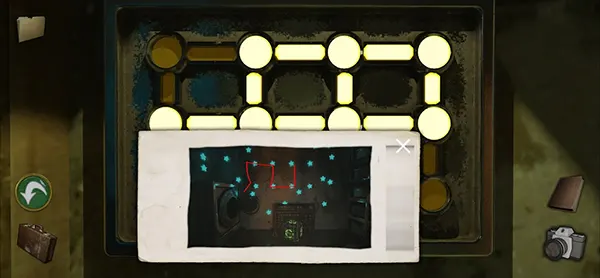
Most solutions are based on observation rather than random experimentation. Players are rewarded for paying attention to colours, symbols, object placement, and numerical sequences. This design philosophy makes progression feel fair because answers can usually be discovered through careful analysis.
The game also avoids excessive complexity. Even when puzzles become more challenging, they remain understandable within the context of the environment. This balance helps maintain engagement without creating unnecessary frustration.
Visual Design and Atmosphere
One of the most noticeable aspects of Infinity Pool is its presentation. The environment features clean architecture, tropical scenery, and bright lighting that contrast with the mystery-driven gameplay. The visual style supports exploration by making important objects easy to identify without obvious highlighting.
The colour palette focuses on natural blues, whites, and warm tones associated with luxury resorts. These choices help create a calm atmosphere that differs from the darker settings commonly found in escape room games. As a result, the experience feels relaxing despite its puzzle-oriented structure.
Sound design contributes to immersion as well. Background audio includes ambient environmental effects such as water movement and distant outdoor sounds. The soundtrack remains subtle, ensuring that players can concentrate on solving puzzles rather than being distracted by dramatic music.
User Experience on Smartphones
Infinity Pool was designed specifically for touchscreens, and its controls reflect that focus. Tapping, zooming, and rotating objects feel intuitive on modern Android and iOS devices. Most interactions require only simple gestures, making the game accessible to a wide audience.
Performance remains stable even on mid-range smartphones released in recent years. Loading times are generally short, and the compact game environment reduces hardware demands. This allows players to enjoy the experience without requiring a high-end device.
The interface is intentionally minimal. Menus stay out of the way during gameplay, leaving the environment as the primary focus. Inventory management is straightforward, helping players concentrate on clues rather than navigating complicated systems.
Strengths, Weaknesses, and Overall Value
The game’s greatest strength lies in its balance between accessibility and challenge. Newcomers can understand the mechanics quickly, while experienced puzzle enthusiasts still encounter enough complexity to remain interested. The logical puzzle design consistently supports this balance.
Another advantage is the game’s compact structure. Players can complete the adventure in a relatively short period, making it suitable for evening gaming sessions or travel. The concise format ensures that the experience remains focused from beginning to end.
However, players looking for a lengthy narrative or multiple locations may find the scope limited. Infinity Pool prioritises quality over quantity, and its shorter duration means that some players may complete it within a single sitting.
Is Mini Escapes: Infinity Pool Worth Playing in 2026?
For fans of escape room games, Infinity Pool remains a worthwhile mobile title in 2026. Its puzzle design demonstrates a clear understanding of what makes environmental problem-solving enjoyable, while the resort setting offers a refreshing alternative to traditional mystery locations.
The game is particularly suitable for players who appreciate observation-based challenges rather than action-oriented gameplay. Because progress depends on logical reasoning, success feels earned rather than dependent on luck or repetition.
Overall, Mini Escapes: Infinity Pool delivers a polished and focused escape room experience for smartphones. Its thoughtful puzzles, attractive presentation, and accessible controls make it a strong choice for anyone interested in mobile puzzle adventures.